

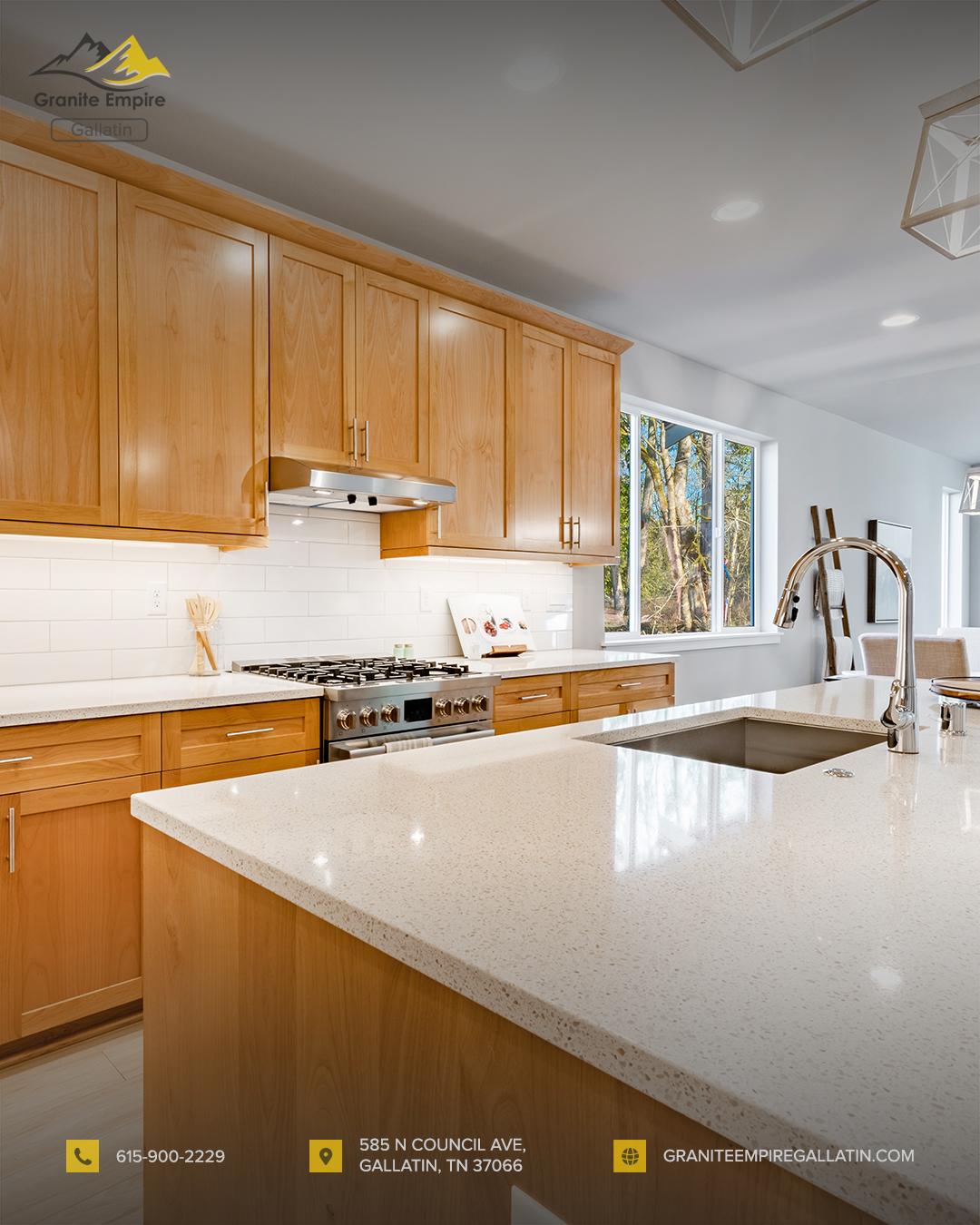
Granite countertops are usually associated with natural stone, but the answer is slightly more nuanced: true granite is a natural stone and is not manufactured in a factory, although granite countertops can be processed, cut, polished, and customized extensively before installation. There are also engineered materials designed to resemble granite, but these are not technically granite.
At Granite Empire of Gallatin, we help homeowners compare natural granite with engineered countertop materials so they can choose a surface that fits both the design and practical needs of a kitchen or bathroom. If you are considering custom granite countertops Nashville, TN, understanding the difference between natural granite and man-made alternatives is an important first step.
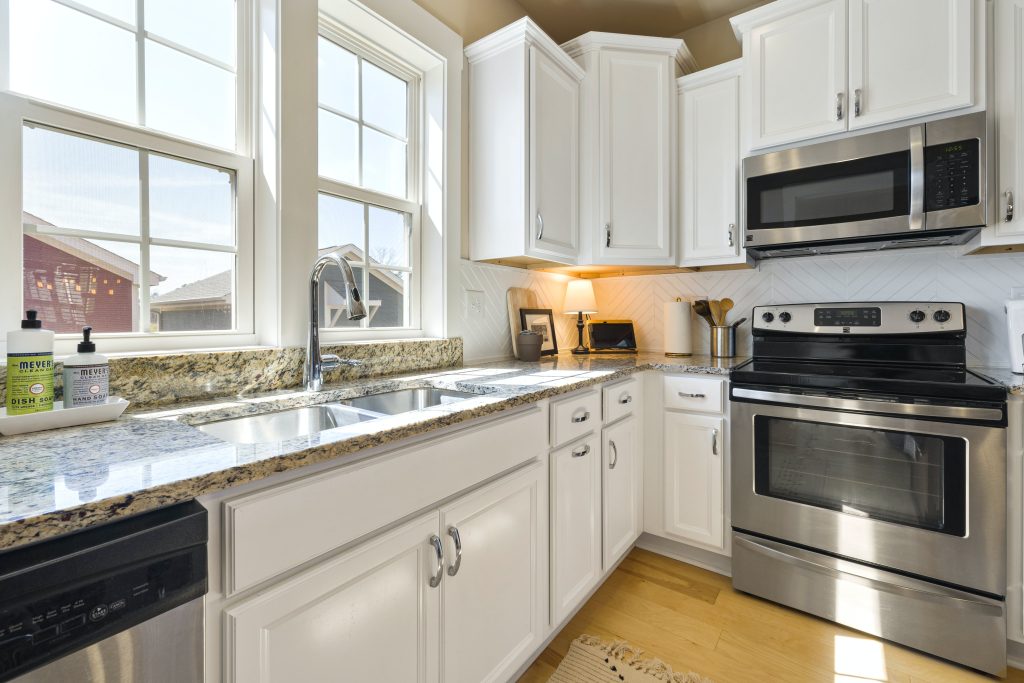
Is Granite a Man-Made Material?
No, granite itself is a naturally occurring igneous rock formed deep beneath the Earth’s surface. It develops over extremely long periods as molten rock cools and crystallizes, creating the distinctive minerals and patterns found in granite slabs.
The main minerals commonly found in granite include:
- Quartz
- Feldspar
- Mica
- Amphibole
- Other trace minerals
Because the geological composition varies from one quarry to another, granite can have dramatically different colors and patterns.
Popular natural granite varieties include Black Pearl, Alaska White, Colonial White, River White, and Ubatuba. Each slab can have its own combination of mineral deposits, movement, speckles, and veining.
This natural variation is one of the biggest reasons homeowners choose custom granite countertops Nashville, TN for kitchens, bathrooms, islands, and other surfaces.
Can Granite Be Manufactured or Recreated?
Granite cannot be manufactured as genuine granite, but manufacturers can create engineered countertop materials that imitate the appearance of natural stone. These materials can contain crushed stone, mineral particles, resins, pigments, or other components.
For example, engineered quartz is manufactured rather than quarried as a finished slab. Quartz countertops can be designed to imitate granite, marble, or other natural stones.
The important distinction is:
| Material | Natural or Engineered? | Typical Appearance |
|---|---|---|
| Granite | Natural | Unique mineral patterns |
| Quartz | Engineered | Consistent or natural-stone-inspired |
| Quartzite | Natural | Dramatic natural veining |
| Marble | Natural | Soft, elegant veining |
| Porcelain | Manufactured | Wide range of patterns |
| Solid Surface | Manufactured | Consistent colors and designs |
So, if you see a countertop advertised as “man-made granite,” it is worth asking exactly what material it is. Genuine granite is natural; a manufactured product may simply have a granite-inspired appearance.
How Is Natural Granite Turned Into a Countertop?
Natural granite becomes a countertop through a fabrication process rather than a manufacturing process that creates the stone itself. Large blocks are extracted from quarries and processed into slabs that can then be customized for individual homes.
The process generally includes:
- Quarrying large granite blocks
- Cutting blocks into slabs
- Calibrating slab thickness
- Polishing or finishing the surface
- Transporting slabs to a fabricator
- Measuring the customer’s cabinets
- Creating a template
- Cutting the slab to specification
- Creating sink and cooktop cutouts
- Fabricating the selected edge
- Polishing exposed edges
- Installing the finished countertop
This allows us to transform a naturally occurring slab into a highly customized countertop.
For homeowners considering custom granite countertops Nashville, TN, customization does not mean that we manufacture the granite itself. Instead, we customize a natural slab to fit the exact dimensions and design of the home.
Why Does Natural Granite Look Different From Slab to Slab?
Natural granite varies because every slab develops from a unique geological environment. Mineral concentration, cooling conditions, and geological activity influence the final appearance.
Even two slabs from the same quarry can have noticeable differences.
You may see differences in:
- Background color
- Veining
- Mineral movement
- Speckling
- Crystal size
- Pattern direction
- Color intensity
This variation can be a major design advantage. Instead of having a completely uniform surface, you receive a material with natural character.
For this reason, we recommend looking at the actual slab whenever possible rather than selecting granite based only on a small sample.
Is Engineered Quartz the Same as Man-Made Granite?
No. Engineered quartz and granite are different materials.
Quartz countertops are manufactured using quartz minerals combined with binders, pigments, and other components. The manufacturing process allows producers to create highly consistent colors and patterns.
Granite, in contrast, is quarried as natural stone and then fabricated into the required countertop shape.
Quartz can be an excellent alternative for homeowners who want a controlled appearance. Granite may be preferable when natural variation and authentic stone character are priorities.
What Are the Main Differences?
| Feature | Natural Granite | Engineered Quartz |
|---|---|---|
| Origin | Natural stone | Manufactured |
| Pattern | Naturally variable | More predictable |
| Customization | Cut and fabricated | Cut and fabricated |
| Maintenance | Generally low, sealing may be recommended | Generally low |
| Heat resistance | Excellent | Lower than granite |
| Appearance | Unique natural variation | Consistent designs available |
| Typical price | $40–$100+ per sq. ft. installed | $50–$120+ per sq. ft. installed |
Actual prices vary according to material, thickness, brand, edge profile, installation, project size, and market conditions.
Are Man-Made Countertops Better Than Granite?
Neither option is universally better because the right material depends on your priorities. Granite offers authentic natural stone character and excellent heat resistance, while engineered materials can provide more predictable patterns and colors.
Granite can be particularly appealing if you want:
- A natural material
- Unique slab-to-slab variation
- Strong resistance to everyday wear
- Excellent heat resistance
- A wide range of colors
- A traditional or luxury appearance
Engineered quartz can make sense if you prioritize:
- Consistent color
- Predictable patterns
- Low routine maintenance
- Contemporary designs
- Marble- or granite-inspired patterns
At Granite Empire of Gallatin, we can help you compare both options according to your kitchen layout, lifestyle, budget, and preferred design.
Can Natural Granite Be Customized?
Yes. Natural granite can be extensively customized after the slab has been selected. We can fabricate the stone to accommodate the dimensions and features of your specific kitchen or bathroom.
Customization may include:
- Countertop dimensions
- Island shapes
- Sink openings
- Faucet openings
- Cooktop openings
- Backsplashes
- Edge profiles
- Rounded corners
- Angled corners
- Waterfall edges
- Seam placement
This is where custom granite countertops Nashville, TN can provide a significant design advantage. A natural slab can be transformed into a countertop that fits a specific cabinet configuration instead of forcing the room to accommodate a standard-size surface.
How Much Do Custom Granite Countertops Cost?
Natural granite countertops commonly cost approximately $40–$100 or more per square foot installed, while premium exotic granite can exceed $100 per square foot.
For a typical kitchen, homeowners may spend approximately $2,500–$6,500 for a complete granite countertop project, although a large kitchen, oversized island, premium slab, or complex fabrication can increase the price.
Common additional costs may include:
- Sink cutout: $100–$300
- Cooktop cutout: $100–$250
- Specialty edge: $10–$30 per linear foot
- Backsplash: $20–$50 per square foot
- Existing countertop removal: $200–$600
- Additional seams: approximately $100–$300 each
These are general U.S. price ranges rather than a guaranteed project quote.
When comparing custom granite countertops Nashville, TN, always ask whether the estimate includes the slab, fabrication, edge finishing, delivery, installation, cutouts, and applicable taxes or additional services.
How Long Does It Take to Create a Granite Countertop?
A typical granite countertop project can take approximately 1–3 weeks from final material selection to installation. The exact schedule depends on slab availability, measurements, fabrication complexity, and installation scheduling.
A straightforward project may follow this timeline:
| Stage | Typical Time |
|---|---|
| Select material | 1–3 days |
| Measure/template | 1–3 days |
| Fabrication | 5–10 business days |
| Final preparation | 1–2 days |
| Installation | Usually 1 day |
Special-order materials or complicated kitchens can require additional time.
For a smoother project, we recommend choosing your granite before final fabrication scheduling so we can coordinate measurements and production efficiently.
Which Granite Colors Are Most Popular?
Popular granite colors range from bright whites and creams to dramatic blacks and darker browns. The best choice depends on cabinetry, flooring, backsplash, lighting, and the overall style of the kitchen.
Some frequently selected varieties include:
Alaska White: A light granite with gray and darker mineral movement.
Colonial White: A relatively soft, neutral appearance that works well with white and gray cabinetry.
Black Pearl: A dark granite with subtle gray and metallic-looking mineral variation.
Ubatuba: A deep green-black granite that can work well in traditional kitchens.
River White: A lighter granite featuring gray movement and darker mineral accents.
When selecting natural granite, we encourage homeowners to examine a full slab because small samples may not show the complete pattern.
Does Granite Require Special Care?
Granite is relatively easy to maintain, but care requirements depend on the specific stone and finish. We generally recommend using a pH-neutral stone cleaner and wiping spills promptly.
Avoid routinely using harsh acidic cleaners such as vinegar, lemon juice, or strong abrasive products on stone surfaces.
Basic maintenance includes:
- Wipe spills promptly
- Use a soft cloth or sponge
- Choose a stone-safe cleaner
- Avoid abrasive powders
- Use trivets for extremely hot cookware
- Use cutting boards
- Follow the recommended sealing schedule
Proper care can help natural granite remain attractive for many years.
What Does Granite Empire of Gallatin Recommend?
We recommend choosing granite based on the complete project rather than selecting a material solely because it is natural or manufactured. Consider durability, maintenance, appearance, budget, cabinet color, kitchen size, and how you use the space.
At Granite Empire of Gallatin, we work with homeowners looking for granite and other countertop materials and help with the process from selection through fabrication and installation.
If you are researching custom granite countertops Nashville, TN, we can help you compare available granite colors, slab styles, edge profiles, pricing, and installation requirements.
What Questions Should You Ask Before Buying Granite?
Ask questions about the actual slab, fabrication, installation, pricing, and maintenance before placing an order.
Useful questions include:
- Is this genuine natural granite?
- Can I see the complete slab?
- Where was the granite quarried?
- What thickness is available?
- Which edge profiles are available?
- How many seams will my project require?
- Is the sink cutout included?
- Does installation come with the quoted price?
- How long will fabrication take?
- What maintenance does this specific granite require?
These questions can help you compare custom granite countertops Nashville, TN based on the complete value of the project rather than only the material’s price per square foot.
Frequently Asked Questions About Man-Made Granite
Can granite be man-made?
No. Genuine granite is a natural igneous rock. Manufacturers can create engineered countertops that resemble granite, but those products are not genuine granite.
What countertop looks like granite but is man-made?
Engineered quartz is one of the most common alternatives. Manufacturers can produce quartz surfaces with colors and patterns inspired by natural granite.
Is quartz stronger than granite?
Both are durable countertop materials, but their performance differs. Granite generally has excellent heat resistance, while quartz offers a highly consistent manufactured surface.
Is natural granite expensive?
Granite can range from approximately $40–$100+ per square foot installed, with premium and exotic varieties costing more.
Can granite be customized?
Yes. We can fabricate natural granite into custom shapes with sink cutouts, cooktop openings, backsplashes, and various edge profiles.
How long does granite fabrication take?
Many standard projects can be fabricated within approximately 5–10 business days after final measurements and material selection, with the entire project commonly taking 1–3 weeks.
Is natural granite worth considering for a kitchen?
Yes, especially if you appreciate natural variation, durability, heat resistance, and the unique appearance of genuine stone.
Can I get a custom granite countertop for a specific kitchen layout?
Yes. That is one of the main benefits of professional fabrication. We can measure and fabricate the slab according to the specific dimensions and features of your kitchen.
How Can You Contact Granite Empire of Gallatin?
Granite Empire of Gallatin can help you explore natural granite, quartz, quartzite, marble, and other countertop options. We provide countertop selection, fabrication, and installation services for homeowners looking for a customized finished surface.
If you are interested in custom granite countertops Nashville, TN, our team can help you determine which material, color, thickness, edge profile, and design will work best for your space.
Granite Empire of Gallatin
Address: 585 N Council Ave, Gallatin, TN 37066
Phone: (615) 900-2229
