

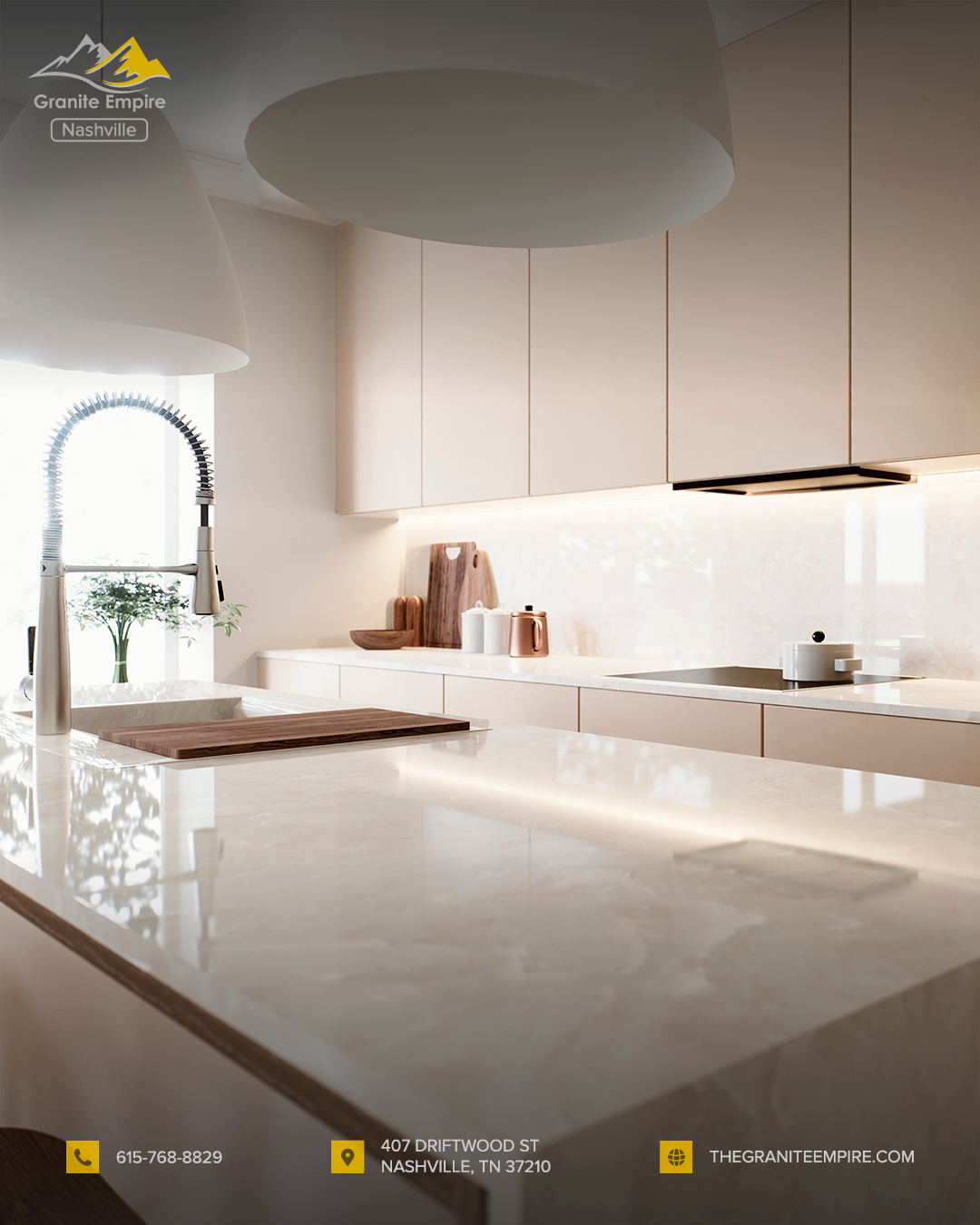
Designing a kitchen around marble is less about chasing trends and more about creating a space that feels permanently refined. Homeowners are often drawn to marble because it doesn’t just decorate a kitchen — it defines its atmosphere. Light moves differently across it, reflections soften cabinetry, and even simple layouts gain architectural presence. Yet many buyers hesitate because they’re unsure how to design correctly around it. A marble surface demands thoughtful planning, not complicated planning. The difference matters.
Granite Empire of Nashville regularly works with homeowners who love marble but fear making expensive visual mistakes. The truth is that marble rarely looks wrong. What changes is how well the surrounding elements support it. When planned correctly, the kitchen remains elegant for decades rather than feeling dated after a few seasons.
Is marble too bold for a full kitchen or better as an accent?
Many homeowners worry marble might overpower the room. This usually comes from seeing showroom slabs displayed under strong lighting where the veining appears dramatic. Inside a real home, the opposite happens. Cabinets, walls, appliances, and flooring break up the pattern visually. Instead of dominating the space, marble becomes the visual anchor that organizes everything else.
Using marble across a large island often looks calmer than using it only on a small section because the eye understands a continuous surface more easily than fragmented material changes. A partial application can feel decorative. A full application feels architectural. That distinction determines whether a kitchen feels intentional or improvised.
This is why people searching for marble kitchen countertops in Lewisburg, TN often discover they prefer larger installations after seeing real kitchens rather than sample boards. The scale allows the veining to flow naturally rather than appearing busy. Marble rarely overwhelms space; it stabilizes it.
Smaller kitchens especially benefit from marble because its natural brightness reflects light, visually expanding the room. Instead of making a space feel crowded, it removes visual weight that darker or heavily patterned materials sometimes introduce.
How do you choose cabinets that don’t compete with marble?
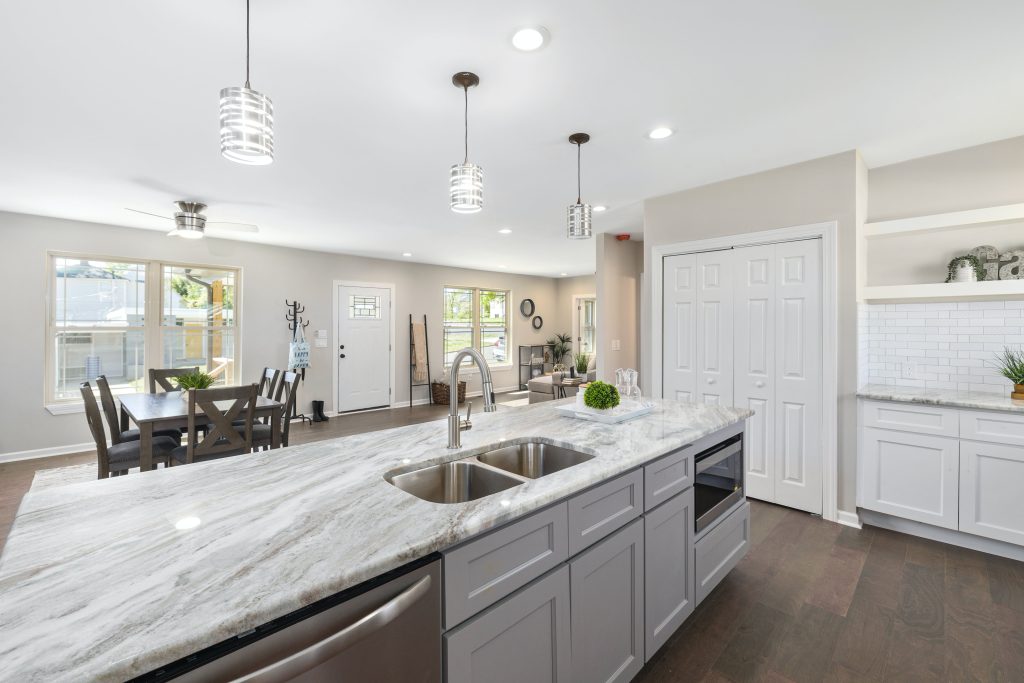
Cabinet selection is where most marble kitchens succeed or fail. The goal is not matching colors but controlling contrast. Marble already contains complexity. Cabinets should introduce calm structure around it.
Flat panel doors, simple shaker profiles, or minimal detailing work best because they give the stone visual breathing room. Highly carved cabinetry competes with the organic veining and creates visual noise. The kitchen then feels smaller because the eye struggles to settle anywhere.
Color matters less than tone consistency. Warm marble pairs best with warm whites, taupes, or natural wood. Cooler marble harmonizes with soft grays and muted painted finishes. Stark pure white cabinetry sometimes creates too much contrast, making the stone appear darker than intended.
Granite Empire of Nashville often explains that marble is not a color — it is a texture. Designing around texture instead of shade creates a more timeless kitchen. Once homeowners see full slab installations instead of samples, the cabinet decision becomes clearer.
Many clients considering marble kitchen countertops in Lewisburg, TN initially plan dark cabinets but later choose softer tones after viewing full layouts. The marble doesn’t need framing; it needs balance.
What lighting works best with marble surfaces?
Lighting determines whether marble looks luxurious or flat. The material responds strongly to directional light because the crystalline structure reflects differently across the veins and background. Poor lighting hides this effect. Proper lighting reveals depth.
Under-cabinet lighting is essential because it spreads light horizontally across the surface, highlighting the natural movement within the stone. Overhead spotlights alone create glare without depth. Combining soft overhead lighting with diffused strip lighting produces the layered effect marble is known for.
Natural daylight enhances marble more than any artificial source. Kitchens designed to allow indirect sunlight — not direct harsh beams — show the material at its best. Morning and evening light especially reveal subtle tonal shifts that make marble feel alive rather than static.
Homeowners researching marble kitchen countertops often assume maintenance determines satisfaction, but lighting actually plays a bigger role. A well-lit marble kitchen appears cleaner and brighter even years later because the surface continues interacting with light rather than absorbing it.
Proper lighting design also reduces the need for overly bright fixtures, allowing a kitchen to feel comfortable instead of clinical.
Will marble still look stylish in 10–15 years?
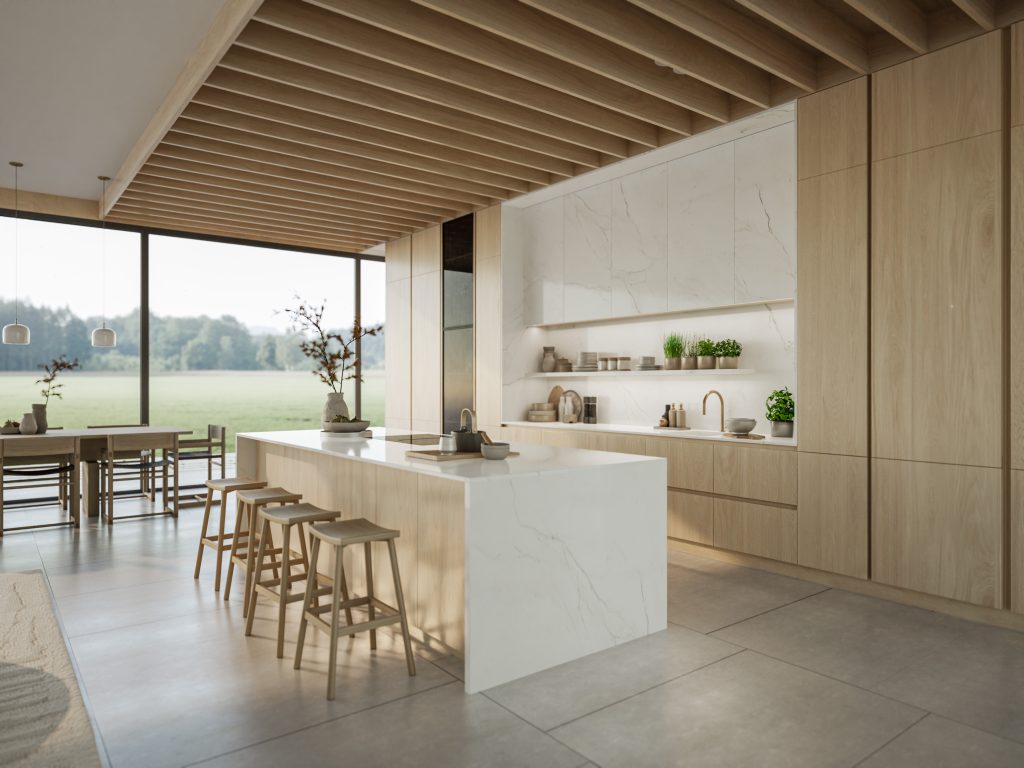
Style longevity is the biggest concern homeowners express. Unlike bold patterned materials tied to specific trends, marble has existed in architecture for centuries because it adapts to changing surroundings. Cabinets can be repainted, hardware replaced, and décor updated while the stone remains relevant.
Instead of belonging to one style, marble acts as a neutral foundation across many aesthetics. Traditional kitchens highlight its elegance, modern kitchens emphasize its minimalism, and transitional kitchens use it to connect both worlds. Because it isn’t dependent on color trends, it ages with the home rather than against it.
Granite Empire of Nashville often compares marble to hardwood flooring. No homeowner removes hardwood because styles changed — they update everything around it. Marble behaves the same way. The investment stays visually valuable while other elements evolve.
Buyers looking into marble kitchen countertops in Lewisburg, TN frequently worry resale buyers may want something different. In practice, marble increases buyer confidence because it signals permanence and quality. Even if tastes differ, the material itself rarely becomes undesirable.
Timelessness comes from material authenticity, not minimalism or ornamentation. Marble maintains relevance because it feels real in every era.
Does marble require complicated care to keep its appearance?
Maintenance fears often come from misunderstanding how marble ages. The goal is not to keep it identical to day one but to preserve its clarity and cleanliness. Routine care is simple: gentle cleaning and periodic sealing. The stone does not demand constant attention.
Over time, marble develops subtle character — not damage — from use. This soft maturation is part of why many designers prefer it. The kitchen feels lived in rather than artificial. Unlike synthetic surfaces that look worn once scratched, marble incorporates minor wear into its overall texture.
People researching marble kitchen countertops in Lewisburg, TN usually discover maintenance is less stressful than expected because they stop trying to preserve a showroom appearance and instead appreciate natural evolution. The surface remains elegant even as daily life happens around it.
Most homeowners ultimately realize the beauty of marble is not fragility but authenticity. It does not pretend to be perfect; it remains visually rich regardless of age.
