

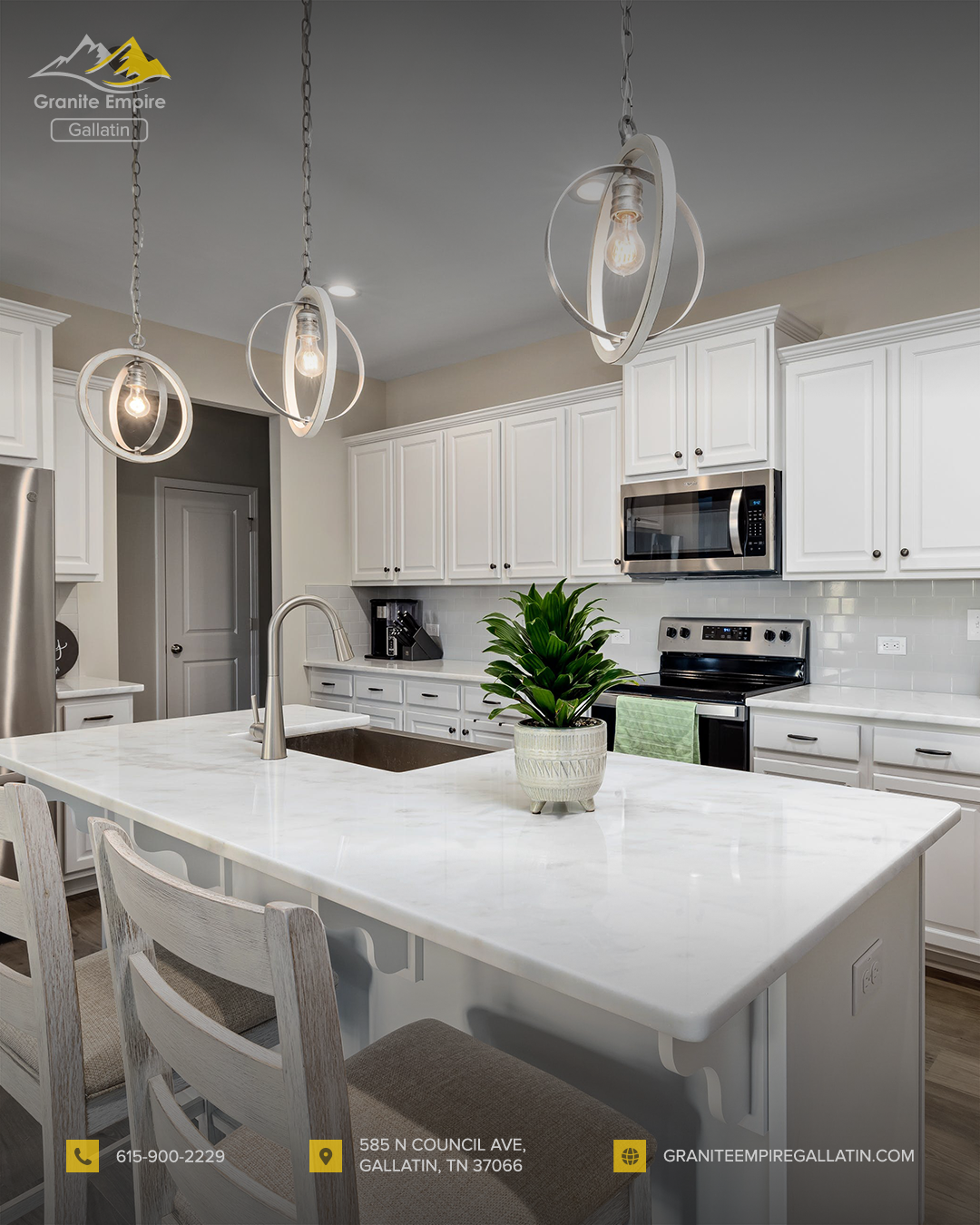
A quality quartz countertop can last 20 years or more, and with proper care, many quartz surfaces can remain attractive and functional for several decades. Quartz is one of the most popular countertop materials because it combines durability, stain resistance, low maintenance, and a wide range of colors and patterns.
For homeowners researching quartz countertops Murfreesboro, TN, understanding the expected lifespan is an important part of planning a kitchen remodel. The initial purchase price is only one part of the investment; the material’s durability, maintenance requirements, warranty, and long-term appearance also matter.
Granite Empire of Gallatin helps homeowners compare quartz with granite, quartzite, marble, and other countertop materials. From material selection and measurements to custom fabrication and professional installation, we can help you choose a countertop that fits both your kitchen and your long-term plans.
How Long Does a Quartz Countertop Usually Last?
A quartz countertop typically lasts 20 to 30 years or longer with normal residential use and proper care. Unlike some countertop materials that require frequent refinishing or sealing, quartz is engineered to provide a durable, low-maintenance surface for everyday kitchens.
Several factors influence how long a quartz countertop remains in excellent condition:
- Quality of the quartz material
- Professional fabrication
- Proper installation
- Everyday kitchen usage
- Exposure to excessive heat
- Cleaning methods
- Impact from heavy objects
- Manufacturer’s care recommendations
Quartz is made primarily from natural quartz minerals combined with polymer resins and pigments. This engineered construction creates a dense surface with consistent characteristics and a broad selection of colors and patterns.
For quartz countertops Murfreesboro, TN, homeowners should look beyond the color of the slab and consider the material’s thickness, manufacturer, warranty, and intended use.

Why Does Quartz Last So Long?
Quartz lasts for decades because engineered quartz combines the hardness of natural quartz minerals with modern manufacturing technology. The result is a dense countertop surface designed to withstand the everyday demands of food preparation and household use.
Quartz is particularly resistant to:
- Everyday scratches
- Common food spills
- Coffee and tea
- Cooking oils
- Water
- Many household stains
- Normal wear from food preparation
The surface is also nonporous, which means liquids generally do not penetrate the material in the same way they can penetrate some natural stones.
This makes quartz particularly convenient for busy kitchens. However, durability does not mean the countertop is indestructible. Heavy impacts, excessive heat, harsh chemicals, and improper cleaning can still damage the surface.
What Can Shorten the Lifespan of a Quartz Countertop?
Excessive heat, heavy impacts, abrasive cleaning, and improper installation can shorten the useful life of a quartz countertop. Most everyday kitchen activities are perfectly suitable for quartz, but certain situations require additional care.
The most important things to avoid include:
- Placing extremely hot cookware directly on the countertop
- Dropping heavy objects on unsupported edges
- Cutting directly on the surface
- Using abrasive powders or harsh scouring pads
- Applying unapproved chemicals
- Standing or sitting on the countertop
- Dragging heavy appliances across the surface
- Ignoring damage around seams or edges
Quartz contains resin, so extreme heat can potentially cause discoloration or thermal damage. We recommend using trivets beneath hot pots, baking dishes, slow cookers, and other high-temperature cookware.
A cutting board is also recommended. Although quartz is highly scratch-resistant, using the countertop as a cutting surface is unnecessary and can dull knives.
Is Quartz More Durable Than Granite?
Quartz and granite are both durable countertop materials, but each has different characteristics. Quartz offers a nonporous, low-maintenance surface, while granite provides the unique variation of natural stone and can tolerate high temperatures particularly well.
| Feature | Quartz | Granite | Marble |
|---|---|---|---|
| Typical lifespan | 20–30+ years | 20–30+ years | 20–30+ years with care |
| Porosity | Nonporous | Varies | More porous |
| Sealing | Usually not required | Usually recommended | Usually recommended |
| Stain resistance | Excellent | Very good | Moderate |
| Heat resistance | Good, but use trivets | Excellent | Good |
| Scratch resistance | Excellent | Excellent | Moderate |
| Pattern consistency | More predictable | Naturally variable | Naturally variable |
| Maintenance | Low | Low–moderate | Moderate–high |
| Typical installed price | $60–$120/sq. ft. | $50–$100/sq. ft. | $60–$150+/sq. ft. |
Prices are approximate and can vary according to material quality, slab availability, fabrication, edge profiles, cutouts, delivery, and installation.
For homeowners comparing quartz countertops Murfreesboro, TN, the choice between quartz and granite often comes down to maintenance preferences and the desired appearance rather than simply durability.
Does Quartz Need to Be Sealed to Last Longer?
No, quartz generally does not require sealing because the finished material is nonporous. This is one of the reasons quartz is considered a low-maintenance countertop option.
Granite and some other natural stones can benefit from periodic sealing because their surfaces may contain microscopic pores. Quartz is manufactured differently, so applying a traditional stone sealer is usually unnecessary.
Instead of sealing, quartz maintenance focuses on simple cleaning:
- Use warm water and mild dish soap for everyday spills.
- Wipe food and liquid spills promptly.
- Use a soft microfiber cloth.
- Choose a manufacturer-approved quartz cleaner for deeper cleaning.
- Avoid abrasive cleaning products.
- Follow the care instructions for your specific quartz brand.
Avoid assuming that more aggressive cleaning means better cleaning. Quartz generally requires very little effort to stay clean.
Which Quartz Brands Can Last for Decades?
Major quartz manufacturers offer products designed for long-term residential use, and many provide substantial warranties for their materials. Popular brands include Cambria, Caesarstone, Silestone, MSI Q Quartz, and Viatera.
Examples of recognizable quartz styles include:
- Cambria Brittannica — white background with dramatic gray veining
- Caesarstone Calacatta Nuvo — marble-inspired appearance
- Silestone Eternal Calacatta — bright surface with prominent veining
- MSI Q Quartz Carrara Lumos — soft white and gray marble-inspired design
- LG Viatera Muse — elegant, contemporary stone appearance
The exact warranty terms vary by manufacturer and product line. Before purchasing, homeowners should review the manufacturer’s warranty requirements, including approved cleaning products, installation requirements, and residential-use limitations.
The slab’s appearance may change slightly over many years due to normal use and environmental conditions, but a properly maintained quartz countertop can remain functional long after other kitchen components have been replaced.
How Much Does a Quartz Countertop Cost?
Quartz countertops typically cost approximately $60 to $120 per square foot installed, with premium materials and complex installations reaching higher prices. A 40-square-foot kitchen countertop could therefore cost approximately $2,400 to $4,800 before specialized upgrades.
Additional project costs may include:
- Sink cutouts: approximately $100–$300+
- Cooktop cutouts: approximately $100–$250+
- Custom edge profiles: approximately $10–$30+ per linear foot
- Backsplash installation: approximately $20–$60+ per square foot
- Waterfall edges: approximately $1,000–$3,000+ per side
- Demolition and disposal: approximately $300–$800
A final estimate depends on the selected slab, kitchen measurements, fabrication requirements, edge treatment, cutouts, and installation conditions.
When researching quartz countertops Murfreesboro, TN, we recommend comparing complete project estimates rather than looking only at the price per square foot. Two countertops with the same material price can have very different final costs because of fabrication and installation requirements.
How Long Does Quartz Countertop Installation Take?
A standard quartz countertop project can often take approximately 7 to 14 business days from final material selection and measurements to fabrication and installation. More complicated projects can require additional time.
A typical schedule may include:
- Consultation and material selection: 1–3 days
- Kitchen measurements: 1–3 days
- Template and fabrication preparation: 1–2 days
- Countertop fabrication: approximately 5–10 business days
- Delivery and installation: usually 1 day
Special-order quartz, large islands, waterfall edges, intricate cutouts, and bookmatched patterns may extend the schedule.
The kitchen should be ready for accurate templating before fabrication begins. Existing countertops may need to be removed, and sinks or appliances may need to be available for precise measurements.
How Can You Make a Quartz Countertop Last Longer?
The best way to extend the life of quartz is to combine normal cleaning with sensible kitchen habits. Quartz does not require complicated maintenance, but preventing avoidable damage can help preserve the original appearance for decades.
Follow these practical guidelines:
Use Cutting Boards
Quartz is highly scratch-resistant, but knives should still be used on cutting boards. This protects the countertop and keeps kitchen knives sharper.
Use Trivets
Never make a habit of placing extremely hot cookware directly on quartz. A trivet provides an easy barrier against excessive heat.
Clean Spills Promptly
Quartz resists staining, but removing coffee, wine, tomato sauce, oil, and other substances promptly is still recommended.
Avoid Harsh Chemicals
Strong solvents, highly alkaline cleaners, abrasive powders, and other aggressive chemicals may damage the surface or finish.
Protect the Edges
Countertop edges can be more vulnerable to impact than the center of the slab. Avoid dropping heavy cookware onto corners or sitting on countertop overhangs.
Follow Manufacturer Instructions
Different quartz brands can have specific care recommendations. Following the manufacturer’s guidelines helps preserve both the surface and the warranty.
Can Quartz Countertops Look Good After 20 Years?
Yes, a properly maintained quartz countertop can still look attractive after 20 years. One of the biggest advantages of quartz is that the material does not require periodic refinishing or sealing to maintain basic functionality.
However, the kitchen itself may look dated before the countertop reaches the end of its useful life. Cabinetry, flooring, appliances, lighting, and backsplashes can all change considerably over two decades.
This is why selecting a timeless quartz pattern can be a smart long-term design strategy. Soft whites, warm neutrals, subtle gray veining, and understated marble-inspired patterns can work with multiple design styles.
For quartz countertops Murfreesboro, TN, homeowners planning to stay in the same home for many years may want to prioritize a design that will remain compatible with future kitchen updates.
How Does Professional Installation Affect Quartz Longevity?
Professional installation can significantly affect the long-term performance of a quartz countertop. Accurate measurements, proper cabinet support, correctly positioned seams, and appropriate overhang support all contribute to a successful installation.
Professional fabrication may include:
- Precise kitchen templating
- Custom sink cutouts
- Cooktop cutouts
- Edge fabrication
- Seam planning
- Backsplash fabrication
- Island fabrication
- Waterfall edge construction
- Final countertop installation
An improperly supported overhang or poorly planned seam can create problems even when the quartz itself is high quality.
Granite Empire of Gallatin provides quartz countertop selection, custom fabrication, measurements, and professional installation for homeowners planning kitchen remodeling projects. Our team can also compare quartz with granite, quartzite, and marble to help you select a material based on your design and maintenance preferences.
Is Quartz a Good Long-Term Investment for a Kitchen?
Yes, quartz can be an excellent long-term countertop investment for homeowners who want durability combined with low maintenance. With an expected lifespan of approximately 20 to 30 years or longer, quartz can remain in service through multiple appliance replacements and other kitchen updates.
The strongest reasons to consider quartz include:
- Long expected lifespan
- Nonporous surface
- Excellent stain resistance
- Low maintenance
- No routine sealing
- Wide variety of colors and patterns
- Consistent manufactured appearance
- Compatibility with modern and traditional kitchens
The main considerations are the material’s sensitivity to extreme heat and the fact that premium quartz designs can have a higher upfront cost.
For homeowners looking for quartz countertops Murfreesboro, TN, choosing a reputable material and professional installation can help maximize the countertop’s long-term value.

Frequently Asked Questions About Quartz Countertop Lifespan
How many years should a quartz countertop last?
A quality quartz countertop can typically last 20 to 30 years or longer with normal residential use and proper care.
Can quartz countertops last 30 years?
Yes. A well-maintained quartz countertop can remain functional and attractive for 30 years or more, particularly when it is protected from excessive heat, heavy impacts, and harsh chemicals.
Does quartz last longer than laminate?
Generally, yes. Quartz is significantly more durable than laminate and is designed as a long-term countertop material. Laminate can still be an economical choice for projects with a limited budget.
Does quartz scratch easily?
No. Quartz is highly scratch-resistant, although it is not completely scratch-proof. Cutting directly on the countertop is still not recommended.
Can you put a hot pan on quartz?
It is best not to place very hot pans directly on quartz. Use a trivet or heat-resistant pad to reduce the risk of thermal damage.
Does quartz stain easily?
Quartz is highly stain-resistant because the surface is nonporous. Common kitchen liquids such as coffee, tea, and wine should still be cleaned rather than left on the surface for prolonged periods.
Is quartz more expensive than granite?
Quartz and granite have overlapping price ranges. Quartz typically costs approximately $60–$120 per square foot installed, while granite often falls around $50–$100 per square foot, although premium materials can cost considerably more.
How long does it take to install quartz countertops?
A standard quartz countertop project may take approximately 7–14 business days from material selection and final measurements through fabrication and installation. Special-order materials or complicated designs can take longer.
How Can You Contact Granite Empire of Gallatin?
For quartz countertop selection, custom fabrication, measurements, and professional installation, contact Granite Empire of Gallatin to discuss your kitchen remodeling project.
Granite Empire of Gallatin
Address: 585 N Council Ave, Gallatin, TN 37066
Phone: (615) 900-2229
